Ghana Salary Structure 2026: Complete Guide to SSSS, SSNIT, PAYE & GoG EPayslip
If you are a Ghana government employee, understanding how your salary is calculated is very important. This guide works alongside our main GoG EPayslip Portal guide, which covers login, registration, and using the portal day to day. Every month, your payslip shows figures such as Basic Salary, Housing Allowance, SSNIT Contribution, PAYE Tax, NHIL Deduction, Gross Salary, and Net Salary. Many employees see these numbers every month but do not fully understand how they are calculated or what they mean for their take home pay.
This complete guide explains the Ghana Salary System 2026 in detail, covering the Single Spine Salary Structure (SSSS), salary grades and steps, the new minimum wage, salary increments, SSNIT deductions, PAYE tax calculations, common allowances, sample salary calculations, and how to verify your salary through the GoG EPayslip portal.
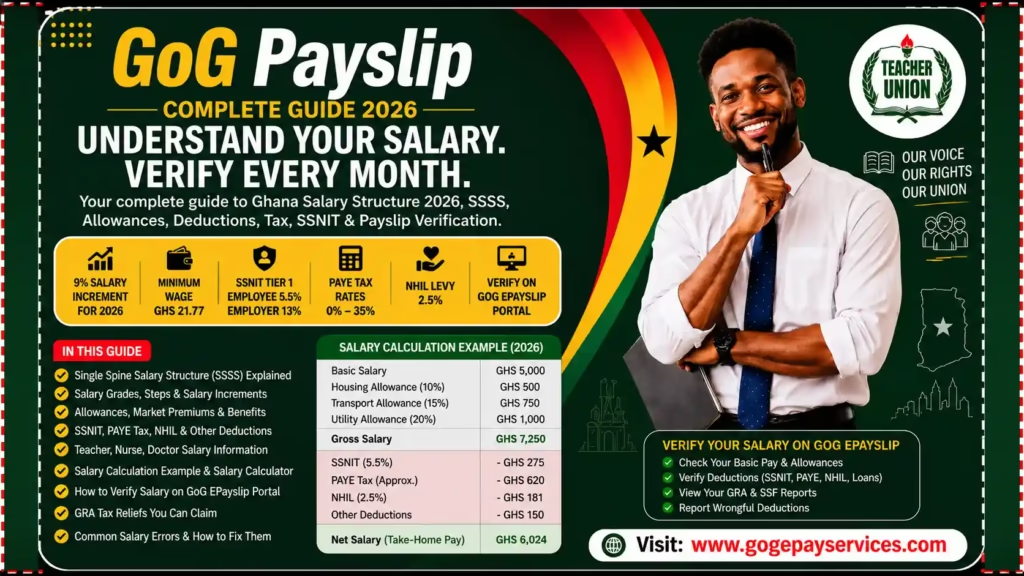
Ghana Salary Structure 2026 at a Glance
The figures below reflect the rates and bands approved for 2026 at the time of writing. Salary structures, tax bands, and contribution rates are reviewed periodically by the relevant authorities, so treat this as a reference point and confirm exact figures against your own GoG EPayslip.
| Item | Value |
|---|---|
| Salary Structure | Single Spine Salary Structure (SSSS) |
| 2026 Salary Increase | 9% |
| National Daily Minimum Wage | GHS 21.77 |
| Employee SSNIT Tier 1 Contribution | 5.5% of Basic Salary |
| Employer SSNIT Tier 1 Contribution | 13% of Basic Salary |
| Employer SSNIT Tier 2 Contribution | 5% of Basic Salary |
| NHIL Levy | 2.5% |
| PAYE Tax Rates | 0% to 35% (progressive) |
| SSNIT Insurable Earnings Ceiling | GHS 69,000 per month |
| Salary Verification Portal | GoG EPayslip |
For the latest confirmed rates, check the FWSC, GRA and SSNIT websites directly, since these figures are reviewed periodically.
For 2026, the Government of Ghana and Organised Labour agreed on a 9% increase in base pay under the Single Spine Salary Structure, along with a matching 9% increase in the National Daily Minimum Wage, which moved from GHS 19.97 to GHS 21.77 per day, effective from January 1, 2026 to December 31, 2026.
What Is the Single Spine Salary Structure (SSSS)?
The Single Spine Salary Structure (SSSS) is the official pay framework used for Ghana’s public sector workers. It was introduced in 2010 and is managed by the Fair Wages and Salaries Commission (FWSC).
Before the SSSS was introduced, workers in different government agencies could receive very different salaries despite doing similar work. This created unfairness and constant disputes across the public service. The Single Spine system was created to fix this problem by guaranteeing that every government employee at the same grade and step receives the same Basic Pay, regardless of which ministry, department, or agency they work in.
In simple terms, the SSSS works like a ladder. Every government worker sits on a Grade and a Step on that ladder. As employees gain more experience, they move up the steps, and when they are promoted they move up to a new grade, both of which increase their salary.
Ghana Salary Grades and Steps Explained
Every government employee under the SSSS is assigned two things:
| Grade Level | Example Position |
|---|---|
| Junior Grade | Clerical Officer |
| Middle Grade | Administrative Officer |
| Senior Grade | Principal Officer |
| Management Grade | Director |
As employees gain experience, they move up steps within their grade and receive salary increases even without a promotion. A promotion to a higher grade results in a bigger jump, since the employee moves to the entry point of the new grade rather than just the next step.
Ghana Minimum Wage 2026
The National Daily Minimum Wage in Ghana for 2026 is GHS 21.77 per day.
This represents a 9% increase from the 2025 minimum wage of GHS 19.97, and it was agreed between the Government of Ghana and Organised Labour in November 2025. The agreement was signed by the Fair Wages and Salaries Commission (FWSC), the Ministry of Finance, and labour unions, and it took effect from January 1, 2026 through December 31, 2026.
Confirm the current minimum wage directly on the FWSC website, since this rate is reviewed periodically.
Minimum Wage History
| Year | National Daily Minimum Wage | Increment |
|---|---|---|
| 2024 | GHS 18.15 | 15% |
| 2025 | GHS 19.97 | 10% |
| 2026 | GHS 21.77 | 9% |
Single Spine Salary Increment 2026
For the 2026 fiscal year, the Government of Ghana approved a 9% increase in the base pay of the Single Spine Salary Structure for all public sector workers. This means every Ghana government employee under the SSSS saw their Basic Salary go up by 9% from January 2026, on top of whatever grade and step they were already on.
This follows a 10% increment in 2025 and a 15% increment in 2024, which means the 9% increase for 2026 is the lowest increment in nearly a decade according to data compiled by the Fair Wages and Salaries Commission. Labour unions have used this point to push the government to review the broader SSSS system, with some leaders describing the pay policy as having drifted from its original purpose of equal pay for equal work.
How Ghana Government Salaries Are Structured
Every Ghana government employee’s salary is made up of two main parts: Basic Pay and Allowances. Together, these form the Gross Salary.
1. Basic Salary
Basic Salary, sometimes called Basic Pay, is the fixed monthly amount set by the SSSS according to the employee’s grade and step. All employees at the same grade and step receive the same Basic Pay, no matter which department they work in.
2. Allowances
On top of Basic Pay, government employees receive different allowances depending on their job, department, and conditions of service. The most common allowances that appear on a GoG EPayslip include:
| Allowance | Typical Basis |
|---|---|
| Housing Allowance | Often around 10% of Basic Pay |
| Transport / Vehicle Allowance | Often around 15% of Basic Pay |
| Clothing / Utility Allowance | Often around 20% of Basic Pay |
| Medical / Hardship Allowance | Fixed amount or percentage, varies by job |
| Responsibility Allowance | Depends on role and department |
| Professional Allowance | For specialised professions such as teachers, doctors, and engineers |
For example, if your Basic Pay is GHS 3,000 per month, your allowances might look like this:
Market Premiums and Professional Allowances
The FWSC may also approve Market Premiums to attract and retain critical professionals within the public service. Professionals who may qualify for market premiums include doctors, nurses, pharmacists, engineers, ICT professionals, and university lecturers. Market premiums are paid in addition to Basic Salary and other standard allowances, and they are one reason why two employees on the same grade can still take home different amounts depending on their profession.
Gross Salary vs Net Salary
Gross Salary is your total earnings before any deductions. It includes Basic Salary plus all allowances and, where applicable, market premiums.
Net Salary is the amount you actually receive in your bank account after all deductions have been taken out.
Net Salary = Gross Salary − Total Deductions
Understanding the difference between Gross Salary and Net Salary matters because many employees are surprised when their bank deposit is lower than the salary figure they were quoted. The gap is made up of statutory deductions, which are explained in detail below.
All Salary Deductions Explained (2026)
These are the deductions that appear on your GoG EPayslip every month.
1. SSNIT Tier 1 (Social Security Contribution)
The Social Security and National Insurance Trust (SSNIT) manages Ghana’s first pension tier, and every Ghana government employee must contribute to it.
| Who Pays | Rate |
|---|---|
| Employee | 5.5% of Basic Salary |
| Employer (Government) | 13% of Basic Salary |
| Total Tier 1 Contribution | 18.5% of Basic Salary |
The 5.5% employee portion is deducted directly from your salary every month. This contribution funds your retirement pension, invalidity benefit, and survivors’ benefit. Confirm current rates directly on the SSNIT website, since contribution rates are reviewed periodically.
2026 SSNIT Cap: The maximum insurable earning for SSNIT in 2026 is GHS 69,000 per month. SSNIT is only calculated on Basic Salary up to this amount, so any basic pay above this ceiling is not subject to SSNIT deductions.
You can check your full SSNIT contribution history at any time on the GoG EPayslip portal under “My SSF Report”.
2. SSNIT Tier 2 (Occupational Pension)
Tier 2 is a mandatory occupational pension scheme managed by private trustees. Unlike Tier 1, Tier 2 is funded entirely by the employer.
| Who Pays | Rate |
|---|---|
| Employee | 0% |
| Employer (Government) | 5% of Basic Salary |
Tier 2 contributions go into a private pension fund manager of your choice and are normally paid out as a lump sum when you retire. You can track your Tier 2 deductions on the GoG EPayslip portal under “Tier 2 Deductions”.
Together, Ghana’s three-tier pension system comprises Tier 1 (SSNIT), Tier 2 (mandatory occupational pensions), and Tier 3 (voluntary provident funds and personal pension schemes), and some workers have expressed frustration that the benefits promised under this system have not fully materialised as originally envisioned.
3. PAYE Income Tax
The Ghana Revenue Authority (GRA) collects income tax through the Pay As You Earn (PAYE) system. Your employer deducts PAYE from your salary every month and remits it directly to GRA.
Ghana uses a progressive tax system, meaning the more you earn, the higher the tax rate on the additional income. The tax bands below reflect the 2026 GRA rates at the time of writing. Confirm the current bands directly on the GRA website before relying on them for tax planning.
| Monthly Income (GHS) | Tax Rate |
|---|---|
| First GHS 490 | 0% (Tax Free) |
| Next GHS 110 | 5% |
| Next GHS 130 | 10% |
| Next GHS 3,166.67 | 17.5% |
| Next GHS 16,000 | 25% |
| Next GHS 30,520 | 30% |
| Above GHS 50,416.67 | 35% |
On an annual basis, the first GHS 5,880 of income is completely tax free, which equals GHS 490 per month. As an illustrative example only, a worker earning around GHS 60,000 a year could pay an effective PAYE rate of roughly 17%, working out to about GHS 10,182 in annual income tax. Use the official GRA calculator or your own GoG EPayslip for your exact figure
Important: PAYE is calculated on your income after your SSNIT Tier 1 contribution of 5.5% has been deducted. This means your SSNIT deduction lowers the amount of income that gets taxed, which slightly reduces your PAYE bill.
You can verify your full GRA tax history on the GoG EPayslip portal under “My GRA Report”.
4. National Health Insurance Levy (NHIL)
NHIL is a levy connected with Ghana’s broader tax system and supports the National Health Insurance Scheme. It is generally applied through the taxation of goods and services rather than being treated as a standard direct salary deduction.
The way taxes and levies appear on payroll records may vary. Employees should check their own GoG EPayslip and confirm the applicable treatment with the Ghana Revenue Authority (GRA) if they are unsure.
Tax rules and levy arrangements may change, so always refer to the latest official GRA information.
5. Loan and Third-Party Deductions
Additional deductions that may appear on your payslip include:
- Union dues
- Vehicle loans
- Welfare contributions
- Cooperative loans
- Salary advances and other approved loan repayments
These appear on your GoG EPayslip under “Third Party Deductions” or “Loan Deductions”.
Overtime and Bonus Tax Treatment
Overtime payments, bonuses, and other additional earnings may be subject to different tax treatment under Ghana’s applicable tax rules.
The final tax amount can depend on the employee’s income, employment category, applicable exemptions, and the latest Ghana Revenue Authority guidance.
Employees should confirm the current treatment of overtime and bonus payments through the official GRA website, their payroll department, or their GoG EPayslip.
Complete Salary Calculation Example (2026)
Here is a simple worked example of how a Ghana government employee’s salary is calculated under the 2026 structure.
Assumptions:
- Basic Pay = GHS 3,000
- Illustrative Housing Allowance = GHS 300
- Illustrative Transport Allowance = GHS 450
- Illustrative Clothing Allowance = GHS 600
- Illustrative Gross Salary = 4,350
The actual SSNIT contribution, PAYE tax, pension contributions, tax reliefs, loans, and other deductions must be calculated according to the employee’s specific circumstances and the latest official rules.
For an accurate result, employees should check their own GoG EPayslip or use the official GRA and SSNIT guidance. The example above should not be used to estimate an individual’s final take-home pay.
| Item | Amount (GHS) |
|---|---|
| Basic Pay | 3,000 |
| Housing Allowance (10%) | 300 |
| Transport Allowance (15%) | 450 |
| Clothing Allowance (20%) | 600 |
| Gross Salary | 4,350 |
| SSNIT Tier 1 (5.5% of Basic Pay) | −165 |
| GRA PAYE Tax (on taxable income) | −approx. 220 |
| Other deductions and levies (approx. 2.5%) | −approx. 109 |
| Total Deductions | approx. −494 |
| Net Salary (Take Home Pay) | approx. 3,856 |
This is an illustrative example only, not a tax calculation for your specific situation. Actual deductions vary depending on your grade, your specific allowances, any loan commitments you have, and any tax reliefs you have claimed. Always check your GoG EPayslip or the official GRA calculator for your exact figures.
Teacher Salary in Ghana 2026
Teachers employed by the Ghana Education Service (GES) are paid under the Single Spine Salary Structure, just like other public sector workers. Teacher salaries depend on rank, grade, years of service, professional qualifications, and any responsibility roles held.
Common ranks include Superintendent, Senior Superintendent, Principal Superintendent, Assistant Director, and Deputy Director. Teachers may also receive approved professional and responsibility allowances on top of their basic SSSS pay, much like other government employees covered earlier in this guide. GES staff should also take a look at our guide on Teacher Union since this is one of the most common updates teachers need to make.
Nurse Salary in Ghana 2026
Government nurses also receive their salaries through the Single Spine Salary Structure. Their earnings depend on qualification, grade, years of service, posting location, and any professional allowances they are entitled to.
Some nursing categories may qualify for additional professional benefits and market premiums, similar to the market premium system described above for critical professionals.
Doctor Salary in Ghana 2026
Doctors employed by government hospitals receive their salaries under the SSSS together with approved market premiums. Their earnings depend on medical rank, specialty, experience, any administrative responsibilities they hold, and their posting location. Additional allowances may apply depending on the specific role and health facility.
How Salary Increases Work in Ghana
Ghana government salaries increase in three main ways.
1. Annual SSSS Base Pay Adjustment
Every year, the Government of Ghana and Organised Labour negotiate a percentage increase to the Single Spine base pay. This applies to all public sector workers at the same time. For 2026, this increment was 9%.
2. Step Progression
Within your grade on the Single Spine ladder, you move up a step based on years of service and performance. Moving up a step increases your Basic Pay without any change in your job title.
3. Promotion
When you are promoted to a higher grade on the SSSS, your Basic Pay jumps to the entry point of the new grade, which is typically a bigger increase than a single step progression.
Government vs Private Sector Salaries
It is important to understand that the Single Spine Salary Structure only applies to Ghana government and public sector employees. Private companies set their own salary structures independently.
Government Sector
Private Sector
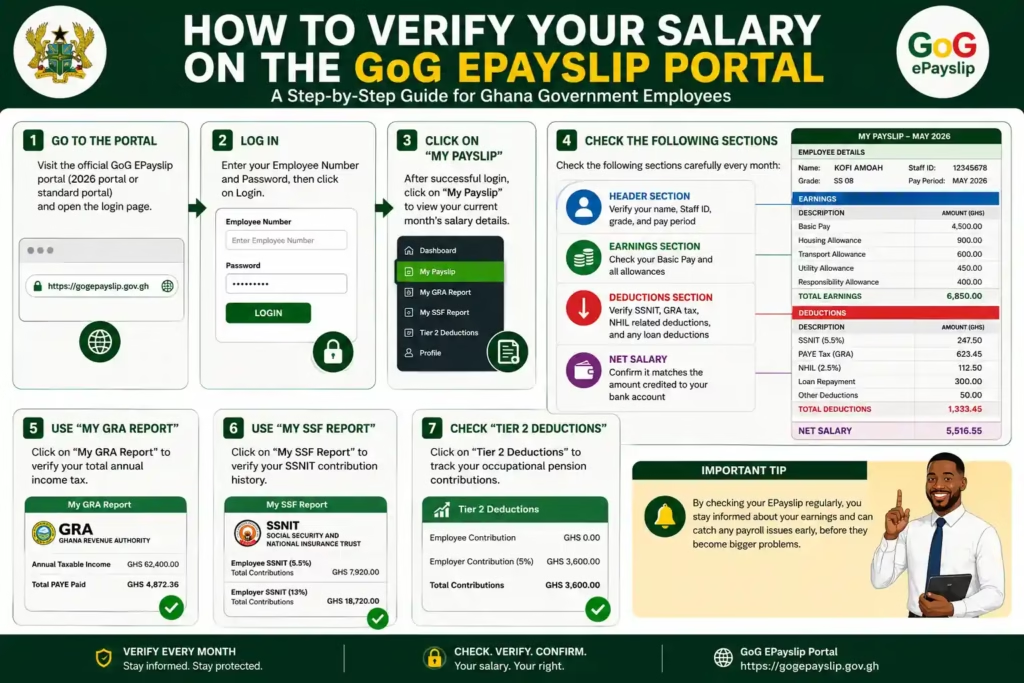
How to Verify Your Salary on the GoG EPayslip Portal
Every Ghana government employee can verify their salary details on the GoG EPayslip portal. Here is how to do it step by step.
Step 1: Go to gogpayslip.com and open the login page.
Step 2: Log in using your Employee Number and Password.
Step 3: Click on “My Payslip” to view your current month’s salary details.
Step 4: Check the following sections carefully every month:
Step 5: Use “My GRA Report” to verify your total annual income tax.
Step 6: Use “My SSF Report” to verify your SSNIT contribution history.
Step 7: Check “Tier 2 Deductions” to track your occupational pension contributions.
The exact menu names and layout may vary depending on your account or the current version of the portal. Follow the instructions shown on the official portal itself.
By checking your EPayslip regularly, you stay informed about your earnings and can catch any payroll issues early, before they become bigger problems.
Common Salary Errors to Watch For
Many Ghana government employees do not check their payslip carefully and end up missing important errors. Watch out for the following:
If you notice any of these issues, report them immediately through the “Wrongful Deductions” feature on the GoG EPayslip portal, or contact your HR department directly.
GRA Tax Reliefs You Can Claim
Depending on your circumstances and the latest Ghana Revenue Authority rules, some taxpayers may qualify for approved tax reliefs. These may include reliefs related to marriage, children, disability, age, or approved pension contributions.
Eligibility, limits, and application procedures can change. Before relying on any tax relief, confirm the current requirements directly through the official GRA website or the GRA Taxpayers Portal.
Do not assume that a tax relief applies automatically to every employee.
| Relief | Amount |
|---|---|
| Marriage Relief | GHS 1,200 per year |
| Child Relief | GHS 1,200 per child, up to 2 children |
| Disability Relief | 25% of income |
| Old Age Relief (60+) | GHS 1,500 per year |
| Tier 3 Voluntary Pension Relief | Up to 16.5% of Basic Salary |
To claim these reliefs, log in to the GRA Taxpayers Portal or download the Ghana Taxpayers App and apply using your Ghana Card (TIN).
GoG EPayslip Portal Helpdesk Contact
If you have any salary concerns or payslip errors that your HR department cannot resolve, you can contact the Controller and Accountant General’s Department (CAGD) directly. For everything else the portal can do beyond payslips, see our GoG Epay Services Features guide.
Official Sources and References
The figures in this guide are drawn from public announcements and official rate tables published by the following bodies:
Fair Wages and Salaries Commission (FWSC) — sets and publishes the Single Spine Salary Structure and annual increment.
Controller and Accountant General’s Department (CAGD) — manages payroll and the GoG ePayslip portal.
Ghana Revenue Authority (GRA) — publishes PAYE tax bands and reliefs.
Social Security and National Insurance Trust (SSNIT) — sets pension contribution rates and the insurable earnings ceiling.
Ministry of Finance (MoF) — coordinates national wage negotiations with Organised Labour.
This is an independent guide and is not an official CAGD, FWSC, or GRA publication. Figures should always be cross-checked against your own GoG EPayslip and the official sources above, since rates and bands can be revised during the year.
The 2026 salary adjustment and minimum wage increase were agreed between the Government of Ghana and Organised Labour and implemented from January 2026.
Related Guides
You may also find these guides helpful for managing your salary and EPayslip account:
GoG EPayslip Registration Guide
FAQs
Conclusion
Understanding the Ghana Salary System 2026 helps every government employee monitor their earnings, verify their deductions, and make sure they are being paid correctly each month. The Single Spine Salary Structure remains the foundation of public sector pay in Ghana, ensuring that employees at the same grade and step are treated equally regardless of which department they work for.
With the approved 9% salary increase for 2026 and the new national minimum wage of GHS 21.77 per day, along with statutory deductions such as SSNIT Tier 1, SSNIT Tier 2, PAYE, and NHIL related levies, employees should make it a habit to regularly review their GoG EPayslip records. Doing so helps confirm that Basic Salary, allowances, grade and step placement, SSNIT contributions, and tax deductions are all accurate, and it allows any payroll errors to be caught and corrected early through HR or the CAGD helpdesk.
About the Author
S Zahid writes independent, beginner-friendly guides about GoG ePayslip, Ghana’s public sector payroll and related online government services. The content is researched from publicly available official sources.
Last reviewed: September 2026
This is an independent guide for Ghana government employees and is not affiliated with CAGD, FWSC, GRA, or the Government of Ghana. Tax bands, contribution rates, and salary increments are reviewed periodically, so always confirm current figures against your own GoG EPayslip or the official sources linked above before making financial decisions.